Nature-Inspired Playgrounds: Bringing the Outdoors into Play
There’s something special about watching children explore the outdoors. Whether they’re climbing rocks, balancing on logs, collecting leaves or discovering insects, nature has a way of turning everyday experiences into opportunities for learning and adventure.
At Churchich Recreation & Design, we believe playgrounds should inspire curiosity, encourage movement and create meaningful connections with the world around us. That’s why nature-inspired playgrounds are becoming an increasingly popular choice for schools, parks, childcare centers and communities looking to create engaging outdoor environments.
By combining natural aesthetics with thoughtfully designed play equipment, these playgrounds bring the wonder of nature into spaces where children can explore, imagine and grow.
What is a Nature-Inspired Playground?
A nature-inspired playground is an outdoor play space designed to reflect elements of the natural environment. Rather than relying exclusively on traditional playground structures, these spaces incorporate organic shapes, earthy colors, natural textures and features inspired by forests, mountains, rivers and other landscapes.
Nature-inspired playgrounds may feature log-style climbers, boulder-like stepping stones, treehouse-themed structures, winding pathways and play panels that encourage children to explore their surroundings.
Some designs incorporate actual natural materials, such as wood, stone, plants and landscaping, while others use durable manufactured equipment that replicates the appearance of these elements.
The goal is to create a space that feels like an extension of the outdoors while providing the safety, accessibility and durability expected from a modern playground.
Why Nature-Inspired Playgrounds Matter
Nature-inspired playgrounds offer much more than visual appeal. They create opportunities for physical activity, imaginative play, sensory exploration and social development.
Encouraging Physical Activity and Adventure
Children naturally gravitate toward environments that challenge them to move in different ways. Nature-inspired playgrounds encourage climbing, jumping, balancing, crawling and exploring.
Features such as climbing boulders, log-style balance beams and uneven stepping paths can help children develop coordination, balance, strength and spatial awareness.
According to the Centers for Disease Control and Prevention (CDC), children ages 6–17 should get at least 60 minutes of moderate-to-vigorous physical activity daily.
Thoughtfully designed playgrounds can help children work toward this recommendation by making physical activity an enjoyable part of their day.
Supporting Creativity and Imaginative Play
One of the most exciting aspects of nature-inspired playgrounds is their ability to encourage open-ended play.
A traditional slide has a recognizable purpose, but a structure resembling a fallen tree or a cluster of rocks can become almost anything in a child’s imagination.
A log might transform into a bridge over a rushing river. A treehouse might become a secret hideout, a wildlife observation station or an explorer’s headquarters.
This flexibility encourages children to create stories, solve problems and invent their own adventures.
Open-ended play also allows children of different ages and abilities to interact with the same equipment in unique ways.
Creating Opportunities for Outdoor Learning
Nature-inspired playgrounds can extend learning beyond the classroom.
For schools and early childhood centers, these environments provide opportunities to introduce concepts related to science, environmental awareness and the natural world.
Children might observe changing seasons, identify plants, explore different textures or learn about local wildlife through educational play panels.
Research published in Frontiers in Psychology in 2019 reviewed evidence suggesting that experiences with nature can support children’s learning, including attention, self-discipline and engagement.
By incorporating nature-inspired play features into educational environments, schools can encourage exploration and discovery through hands-on experiences.
Supporting Social and Emotional Development
Outdoor play gives children opportunities to interact, cooperate and build relationships.
Nature-inspired playgrounds often feature interconnected climbing elements, gathering spaces, imaginative play structures and exploratory pathways that encourage children to engage with one another.
Whether children are navigating an obstacle together or inventing a woodland adventure, these experiences can help them practice communication, teamwork and problem-solving.
Natural themes may also help create welcoming environments that feel less structured and more inviting for children who prefer quieter forms of play.
Popular Features of Nature-Inspired Playgrounds
One of the greatest advantages of nature-inspired playground design is its versatility. These spaces can be customized to complement different landscapes, age groups, budgets and community goals.
Here are several features that can bring a nature-inspired playground to life.
A compact space might include a log-style balance feature, interactive nature panels and thoughtfully selected landscaping rather than a large themed structure.
Log-Style Climbers and Balance Elements
Climbing and balancing features designed to resemble logs, branches or fallen trees introduce movement challenges while maintaining a natural appearance.
These elements encourage children to test their abilities, improve coordination and explore different ways to navigate a play space.
Rock and Boulder-Inspired Play Features
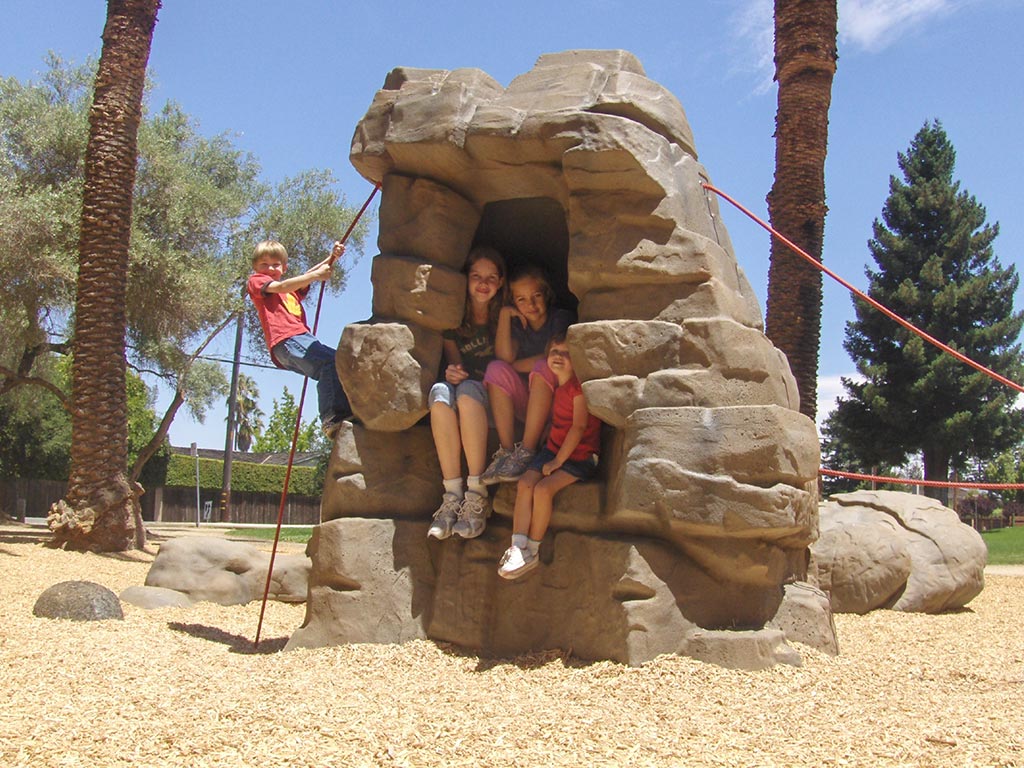
Artificial climbing rocks and boulder-style stepping elements bring the excitement of exploring a rocky landscape to the playground.
They can be incorporated into larger play structures or used as standalone features to create engaging movement opportunities.
Treehouse-Themed Play Structures
Treehouse-inspired playgrounds capture the excitement of exploring a forest canopy.
Elevated platforms, bridges, slides and climbing components can be combined with natural colors and tree-like details to create imaginative outdoor adventures.
Sensory and Discovery Areas
Nature-inspired play isn’t limited to climbing and sliding.
Sensory panels, musical elements, sand and water play and interactive discovery features provide opportunities for hands-on exploration.
These components can also help create more inclusive environments by offering different ways for children to participate.
Landscaping and Natural Gathering Spaces
Trees, native plants, shaded seating areas and winding pathways can help connect the playground to its surrounding environment.
Strategically placed landscaping can also create quieter spaces for observation, social interaction and relaxation.
Designing Nature-Inspired Playgrounds for Inclusivity
An engaging playground should offer meaningful play opportunities for children with different abilities and developmental needs.
Nature-inspired design can incorporate accessible routes, ground-level activities, sensory experiences and inclusive play equipment without sacrificing its overall theme.
For example, a woodland-themed playground might include an accessible pathway connecting interactive panels, ground-level musical features, shaded gathering areas and climbing opportunities.
The key is to provide a variety of experiences so children can explore, participate and interact in ways that work for them.
When planning an inclusive playground, it’s important to consider more than simply providing access to the space. The design should encourage participation, social interaction and opportunities for children to play together.
Bringing Nature-Inspired Play to Different Environments
Nature-inspired playgrounds can be designed for a wide range of settings.
Schools can use them to support outdoor learning and active play during recess. Public parks can incorporate natural themes that complement surrounding landscapes and community green spaces. Childcare centers can introduce age-appropriate discovery areas that encourage early exploration.
Even smaller playgrounds can benefit from nature-inspired elements.
The most successful designs consider the available space, intended age groups, accessibility, maintenance needs and long-term goals of the community.
Create a Natural Play Experience with Churchich Recreation & Design
At Churchich Recreation & Design, we understand that a great playground is about more than equipment. It’s about creating spaces where children can explore their surroundings, challenge themselves, build friendships and make lasting memories.
Nature-inspired playgrounds offer an exciting opportunity to combine the beauty of the outdoors with the creativity and functionality of modern playground design.
Whether you’re planning a new school playground, upgrading a community park or developing an outdoor recreation space, our team can help you explore design options that reflect your vision.
Ready to bring the wonder of nature to your next playground project? Contact Churchich Recreation & Design today to start creating an outdoor play space that inspires adventure, imagination and discovery.
Recent posts